
The world of online retail is evolving faster than ever. Modern consumers expect seamless shopping experiences across websites, mobile apps, social platforms, and even smart devices. Businesses are no longer competing only on product quality or pricing; they are also competing on the quality of digital experiences they provide. Traditional eCommerce systems often struggle to keep up with these demands because they tightly connect the frontend user interface with the backend infrastructure. To overcome these limitations, many organizations are now investing in Headless Commerce Development to build flexible and scalable eCommerce platforms.
As companies explore modern commerce architectures, they increasingly rely on professional Headless commerce development services to design and implement advanced digital commerce systems. These services help businesses separate the presentation layer from the backend functionality, allowing developers to create highly customized shopping experiences while maintaining a powerful and secure backend infrastructure.
Understanding Headless Commerce Development
To fully appreciate the value of Headless Commerce Development, it is important to understand how it differs from traditional eCommerce systems.
In a traditional commerce platform, the frontend (what users see) and the backend (where product data, orders, and inventory are managed) are tightly connected. Any change to the user interface often requires modifications to the backend system.
In contrast, Headless Commerce Development separates the frontend and backend entirely. The backend operates as a commerce engine that provides data through APIs, while developers build independent frontends for websites, mobile apps, or other digital channels.
Businesses frequently work with providers offering Headless commerce development services to build this architecture, ensuring that all digital touchpoints communicate efficiently with the backend through APIs.
This decoupled structure allows companies to innovate faster and deliver personalized customer experiences across multiple channels.
Why Headless Commerce Is Transforming eCommerce
The eCommerce landscape is becoming increasingly complex. Customers interact with brands across numerous platforms, including websites, mobile apps, social media stores, and voice-enabled devices.
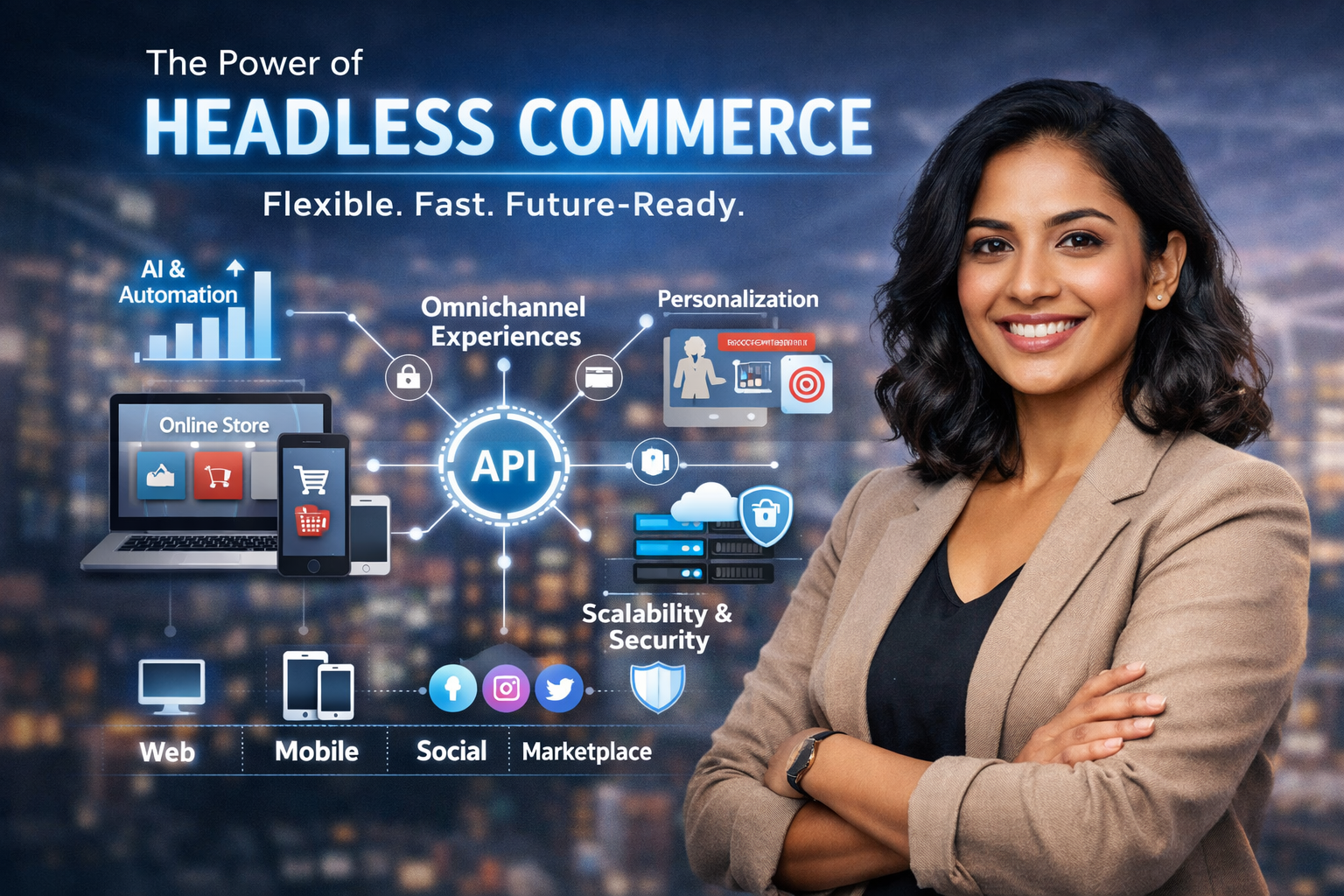
Through Headless Commerce Development, businesses can build a flexible commerce ecosystem capable of supporting all these channels simultaneously.
Professional Headless commerce development services allow companies to connect different digital experiences to a single backend commerce engine. This approach ensures consistency in product information, pricing, and inventory across all platforms.
The ability to deliver consistent experiences across multiple touchpoints is one of the key reasons why headless commerce is rapidly gaining popularity.
Key Benefits of Headless Commerce Development for Modern eCommerce
Businesses that adopt Headless Commerce Development gain several advantages that help them remain competitive in a rapidly evolving digital marketplace.
1. Greater Flexibility in Frontend Design
One of the biggest advantages of Headless Commerce Development is the flexibility it provides in designing frontend experiences.
In traditional platforms, the frontend is limited by the capabilities of the built-in templates and themes. Customizing these elements can be complex and time-consuming.
With the help of expert Headless commerce development services, businesses can design completely custom user interfaces using modern frameworks such as React, Vue, or Angular.
This freedom allows brands to create unique shopping experiences that reflect their identity and engage customers more effectively.
2. Faster Development and Innovation
Speed is essential in the competitive world of eCommerce. Businesses need the ability to launch new features quickly in response to changing market trends.
Through Headless Commerce Development, development teams can work on the frontend and backend independently.
Companies providing Headless commerce development services enable businesses to implement updates without affecting the entire system.
For example, developers can redesign the website interface or launch a new mobile app without modifying the backend infrastructure.
This faster development cycle allows businesses to innovate more rapidly.
3. Omnichannel Commerce Capabilities
Modern consumers interact with brands across multiple platforms.
A shopper might discover a product on social media, explore it on a mobile app, and complete the purchase on a website.
Headless Commerce Development makes it easier to deliver consistent experiences across these channels.
Using professional Headless commerce development services, businesses can connect various customer touchpoints to a single backend commerce system.
This omnichannel approach ensures that product information, pricing, and inventory remain synchronized across all platforms.
Customers benefit from seamless shopping experiences regardless of where they interact with the brand.
4. Improved Website Performance
Website speed and performance are critical factors in eCommerce success. Slow-loading pages can lead to higher bounce rates and lost sales.
Because Headless Commerce Development allows developers to use modern frontend technologies, websites often perform faster and more efficiently.
Teams offering Headless commerce development services optimize frontend frameworks and API connections to ensure rapid loading times and smooth interactions.
Improved performance not only enhances the user experience but also contributes to better search engine rankings.
5. Enhanced Personalization
Personalized shopping experiences are becoming increasingly important in online retail.
Customers expect brands to recommend products based on their preferences, browsing behavior, and purchase history.
With Headless Commerce Development, businesses can integrate advanced personalization tools into their frontend applications.
Professional Headless commerce development services allow companies to connect their commerce platforms with analytics tools, recommendation engines, and customer data platforms.
This integration enables brands to deliver highly targeted experiences that increase engagement and conversions.
6. Easy Integration with Modern Technologies
Modern eCommerce ecosystems often include a wide range of digital tools, including CRM platforms, marketing automation systems, payment gateways, and inventory management software.
Headless Commerce Development makes it easier to integrate these technologies through APIs.
Providers offering Headless commerce development services help businesses connect their commerce platforms with third-party tools efficiently.
These integrations allow companies to automate processes, improve data flow, and gain valuable insights into customer behavior.
As a result, businesses can operate more efficiently and make better strategic decisions.
7. Scalability for Business Growth
As businesses grow, their eCommerce platforms must support increased traffic, larger product catalogs, and more complex operations.
Headless Commerce Development provides a scalable architecture capable of handling these demands.
With the help of experienced Headless commerce development services, companies can design systems that expand easily as the business grows.
For example, businesses can add new digital channels, expand into new markets, or integrate additional services without rebuilding the entire platform.
This scalability ensures long-term sustainability for growing brands.
8. Future-Proof Technology Architecture
Technology continues to evolve rapidly, and businesses must adopt solutions that remain adaptable over time.
Headless Commerce Development provides a future-ready architecture because it separates the frontend from the backend.
This modular approach allows developers to replace or upgrade individual components without disrupting the entire system.
Companies that provide Headless commerce development services help businesses design platforms that can easily incorporate emerging technologies such as artificial intelligence, voice commerce, and augmented reality.
This adaptability ensures that eCommerce platforms remain competitive in the long term.
9. Better Developer Experience
From a technical perspective, Headless Commerce Development also improves the developer experience.
Developers have greater freedom to choose the tools and frameworks that best suit the project requirements.
Teams delivering Headless commerce development services often use modern development environments, continuous integration pipelines, and cloud-based infrastructures.
These tools make it easier for development teams to collaborate, test new features, and deploy updates efficiently.
Improved development workflows ultimately lead to higher-quality applications.
Industries Benefiting from Headless Commerce
A wide range of industries are adopting Headless Commerce Development to improve their digital commerce capabilities.
These industries include:
Retail and fashion brands
Electronics and technology companies
Food and beverage businesses
Beauty and cosmetics brands
Automotive parts retailers
Subscription-based services
With the support of professional Headless commerce development services, companies in these industries can deliver unique and engaging shopping experiences tailored to their customers.
This flexibility allows brands to differentiate themselves in crowded markets.
Choosing the Right Headless Commerce Partner
Selecting the right technology partner is essential for successful Headless Commerce Development.
Businesses should consider several factors when evaluating potential partners, including technical expertise, experience with headless architectures, and the ability to deliver customized solutions.
Providers offering reliable Headless commerce development services typically support businesses throughout the entire development lifecycle, from planning and design to deployment and maintenance.
Working with experienced professionals ensures that the platform is implemented correctly and aligned with business objectives.
The Future of eCommerce with Headless Architecture
The shift toward Headless Commerce Development represents a major transformation in the eCommerce industry.
As digital commerce continues to expand across new channels and devices, businesses will require platforms that can adapt quickly and deliver consistent experiences everywhere.
Professional Headless commerce development services will play an increasingly important role in helping companies adopt flexible architectures and modern technologies.
By embracing this approach, businesses can remain agile and innovative in a constantly evolving digital marketplace.
Conclusion
The future of online retail depends on flexibility, scalability, and the ability to deliver seamless experiences across multiple digital channels. Traditional commerce platforms often struggle to meet these requirements, which is why many businesses are turning to Headless Commerce Development.
By separating the frontend and backend, this architecture enables companies to create highly customized and high-performing eCommerce platforms.
With the support of professional Headless commerce development services, businesses can design omnichannel shopping experiences, integrate advanced technologies, and scale their platforms as they grow.
As digital commerce continues to evolve, Headless Commerce Development will remain a key strategy for companies seeking to build innovative and future-ready eCommerce ecosystems.


Write a comment ...